 If you’re planning a landscape project in Gold Canyon, Apache Junction, Queen Creek, Scottsdale, Cave Creek, or Carefree, one of the most common questions is: how thick should decorative rock be installed? Whether you’re upgrading a residential yard or a commercial property, getting the depth right is critical for appearance, durability, and long-term cost savings.
In the Arizona desert climate—where wind, heat, and heavy monsoon rains all play a role—proper installation of landscape rock isn’t just about looks. It’s about performance.
Why Rock Depth Matters in Arizona Landscaping
Decorative rock (also called landscape rock, gravel, or decomposed granite) is widely used across the Phoenix metro area because it’s low maintenance, water-efficient, and durable. But installing it too thin or too thick can cause problems.
Too thin:
- Weed growth breaks through quickly
- Soil becomes exposed over time
- Rock shifts and looks uneven
- Poor coverage leads to reordering material
Too thick:
- Wasted material and higher cost
- Difficult to walk on
- Can bury edging or irrigation
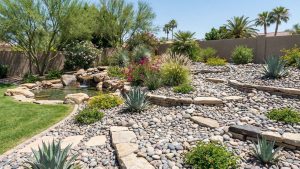 That’s why choosing the correct depth is essential for any project in Queen Creek, Scottsdale, Apache Junction, or Cave Creek.
Recommended Thickness for Decorative Rock
1. Standard Decorative Rock (¾” to 1½” Rock)
For most residential and commercial applications:
👉 Recommended depth: 2 to 3 inches
This is the sweet spot for:
- Front yard landscaping
- Backyard designs
- Around trees and shrubs
- General ground coverage
At 2–3 inches, you get:
- Full soil coverage
- Strong weed suppression (especially with weed barrier)
- Long-lasting, even appearance
This is the most common installation depth used across Gold Canyon, Carefree, and Scottsdale landscapes.
2. Larger Rock (2” to 4” and up)
For bigger decorative rock:
👉 Recommended depth: 3 to 4 inches
Larger rock needs more depth because:
- It doesn’t compact as tightly
- Gaps between rocks are bigger
- It shifts more easily in high-traffic areas
This type of install is popular in:
- High-end homes in Carefree and Cave Creek
- Commercial properties
- Accent areas and dry riverbeds
3. Decomposed Granite (DG)
For pathways and patios:
👉 Recommended depth: 2 to 4 inches (compacted)
DG is different because it compacts down into a firm surface. In areas like Apache Junction and Queen Creek, it’s commonly used for:
- Walkways
- Driveways
- Seating areas
Pro tip: Always compact DG in layers for best results.
Arizona-Specific Factors That Affect Rock Depth
Living and working in the East Valley means dealing with unique conditions. If you’re installing landscape rock in Gold Canyon, Scottsdale, or Cave Creek, here’s what to consider:
🌬️ Wind
Arizona winds can blow lighter rock away if it’s too shallow. A 2–3 inch depth helps keep material in place.
🌧️ Monsoon Rains
Heavy rains can wash out thin layers. Proper depth prevents erosion and keeps your yard looking clean.
🌵 Soil Conditions
Desert soil is hard and uneven. A proper rock base helps level the surface and improve drainage.
Do You Need Weed Barrier Under Rock?
Yes—especially in Arizona.
Installing a high-quality weed barrier fabric underneath your rock:
- Reduces weed growth
- Keeps rock from sinking into soil
- Improves longevity
However, weed barrier is not a replacement for proper depth. Even in Queen Creek or Apache Junction, you still need that 2–3 inch minimum.
How Much Rock Do You Need? (Quick Estimate)
Here’s a simple breakdown:
- 1 ton of rock covers ~100–120 sq ft at 2 inches deep
- 1 ton covers ~70–80 sq ft at 3 inches deep
Example:
If you have a 1,000 sq ft yard in Scottsdale or Gold Canyon:
- At 2 inches → ~10 tons
- At 3 inches → ~13–14 tons
Ordering the right amount upfront saves time, money, and delivery costs.
Common Mistakes to Avoid
❌ Installing Too Thin
Trying to save money by going thin almost always backfires. You’ll end up needing more rock within months.
❌ Skipping Base Prep
Not removing weeds or leveling ground leads to uneven results.
❌ Mixing Rock Sizes Incorrectly
Combining sizes without planning can create an unstable surface.
❌ Ignoring Edging
Without proper edging, rock spreads into sidewalks and driveways—especially in high-end areas like Carefree and Cave Creek.
Pro Tips for a Professional Finish
- Use steel or plastic edging to contain rock
- Spray weeds before installation
- Install weed barrier correctly (overlap seams)
- Rake rock evenly after spreading
- Order slightly extra material to ensure full coverage
For homeowners and contractors in Apache Junction, Queen Creek, Scottsdale, and beyond, these small details make a big difference.
Why Proper Rock Installation Saves You Money
It might seem like adding an extra inch of rock increases cost—but in reality, it saves money over time.
A properly installed rock landscape:
- Lasts for years with minimal maintenance
- Reduces weed control costs
- Prevents reordering and reinstallation
- Boosts curb appeal and property value
In fast-growing areas like Queen Creek and Gold Canyon, curb appeal matters more than ever.
Decorative Rock Installation in the East Valley
If you’re planning a project in:
- Gold Canyon
- Apache Junction
- Queen Creek
- Scottsdale
- Cave Creek
- Carefree
Choosing the correct rock depth is one of the most important decisions you’ll make. Whether it’s a small residential yard or a large commercial install, sticking to the 2–3 inch rule (or more for larger rock) ensures long-term success.
Final Thoughts
So, how thick should you lay decorative rock?
👉 2–3 inches for most applications
👉 3–4 inches for larger rock
👉 2–4 inches (compacted) for decomposed granite
In the Arizona desert, doing it right the first time matters. With proper depth, preparation, and material selection, your landscape will look clean, professional, and built to last—even through heat, wind, and monsoon season.
If you’re working anywhere in the **Phoenix metro area—including Scottsdale, Queen Creek, Apache Junction, Gold Canyon, Cave Creek, or Carefree—**this guide will help you get it done right the first time.